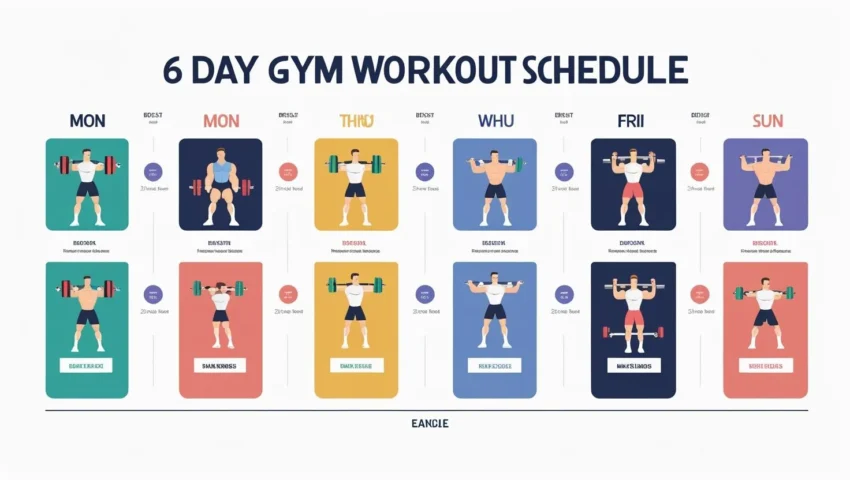
A 6-day gym workout schedule represents one of the most intensive training approaches available to fitness enthusiasts. This routine involves 6 workout sessions per week, done on 6 different days, with only 1 rest day each week. This high-frequency training method allows individuals to target different muscle groups systematically while maximizing weekly training volume.

The concept gained popularity among bodybuilders and advanced lifters who discovered that increased training frequency could accelerate muscle hypertrophy and strength development when properly implemented. Unlike traditional 3-4 day splits, a 6-day schedule demands significant commitment but delivers proportional results.
Benefits of a 6-Day Workout Split
Enhanced Muscle Growth Potential
The primary advantage of six-day training lies in its ability to provide optimal training volume distribution. Research consistently demonstrates that higher training frequencies, when properly managed, lead to superior muscle protein synthesis rates. Each muscle group receives targeted attention twice weekly, creating an environment conducive to continuous growth stimulation.
Improved Training Focus
With dedicated sessions for specific muscle groups, individuals can maintain laser-sharp focus during workouts. This targeted approach eliminates the fatigue that often compromises later exercises in longer, full-body sessions. Each training day serves a specific purpose, allowing for maximum intensity and effort allocation.
Accelerated Strength Development
Frequent exposure to movement patterns enhances neuromuscular adaptation and motor learning. Athletes following 6-day schedules often report faster strength gains due to increased practice frequency with compound movements and specific lift variations.

Popular 6-Day Workout Split Options
Push/Pull/Legs (PPL) x2
The Push/Pull/Legs split represents the gold standard for 6-day training programs. This method splits your body into three parts, with each part trained on its own separate day. The beauty of this approach lies in its logical muscle grouping and recovery patterns.
| Training Day | Muscle Groups | Primary Movements |
|---|---|---|
| Day 1: Push | Chest, Shoulders, Triceps | Bench Press, Overhead Press, Dips |
| Day 2: Pull | Back, Biceps, Rear Delts | Deadlifts, Pull-ups, Rows |
| Day 3: Legs | Quads, Hamstrings, Glutes, Calves | Squats, Lunges, Calf Raises |
| Day 4: Push | Chest, Shoulders, Triceps | Incline Press, Lateral Raises |
| Day 5: Pull | Back, Biceps, Rear Delts | Barbell Rows, Cable Curls |
| Day 6: Legs | Quads, Hamstrings, Glutes, Calves | Romanian Deadlifts, Leg Press |
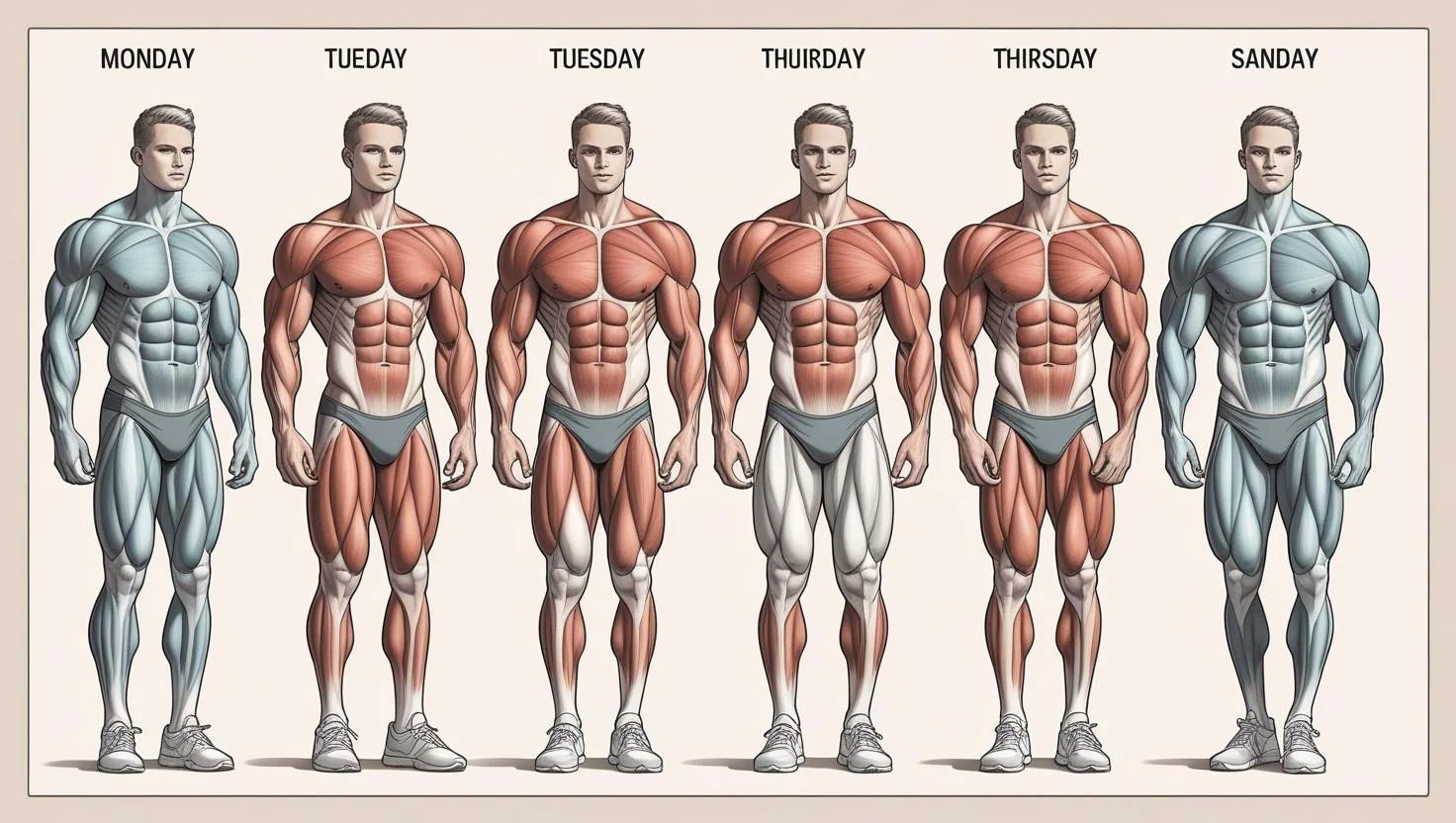
Upper/Lower Split x3
This alternative approach divides training into upper and lower body sessions, repeated three times weekly. This split offers excellent recovery between sessions while maintaining high training frequency.
| Schedule Pattern | Focus Areas | Recovery Time |
|---|---|---|
| Monday: Upper | Chest, Back, Shoulders, Arms | 48 hours |
| Tuesday: Lower | Quads, Hamstrings, Glutes, Calves | 48 hours |
| Wednesday: Upper | Upper body variation | 48 hours |
| Thursday: Lower | Lower body variation | 48 hours |
| Friday: Upper | Upper body finisher | 48 hours |
| Saturday: Lower | Lower body finisher | 48 hours |
Body Part Specialization Split
Advanced lifters often employ specialization splits targeting individual muscle groups daily. This approach allows for maximum volume allocation to specific areas requiring development.
Sample 6-Day Workout Schedule
Week Structure Overview
| Day | Workout Focus | Duration | Intensity Level |
|---|---|---|---|
| Monday | Push (Chest Focus) | 60-75 minutes | High |
| Tuesday | Pull (Back Focus) | 60-75 minutes | High |
| Wednesday | Legs (Quad Focus) | 75-90 minutes | Very High |
| Thursday | Push (Shoulder Focus) | 60-75 minutes | High |
| Friday | Pull (Bicep Focus) | 60-75 minutes | High |
| Saturday | Legs (Hamstring Focus) | 75-90 minutes | Very High |
| Sunday | Complete Rest | N/A | Recovery |
Detailed Daily Workouts
Day 1: Push (Chest Emphasis)
Warm-up Protocol (10-15 minutes)
- Dynamic arm circles: 2 sets x 15 reps
- Band pull-aparts: 2 sets x 20 reps
- Push-up progression: 2 sets x 10-15 reps
Main Workout
| Exercise | Sets | Reps | Rest Period | Technique Notes |
|---|---|---|---|---|
| Barbell Bench Press | 4 | 6-8 | 3 minutes | Control the negative |
| Incline Dumbbell Press | 3 | 8-10 | 2.5 minutes | Full range of motion |
| Decline Barbell Press | 3 | 10-12 | 2 minutes | Squeeze at the top |
| Overhead Press | 4 | 6-8 | 3 minutes | Core engagement |
| Lateral Raises | 3 | 12-15 | 90 seconds | Controlled tempo |
| Tricep Dips | 3 | 12-15 | 2 minutes | Full stretch |
| Close-Grip Bench Press | 3 | 10-12 | 2 minutes | Elbow positioning |

Day 2: Pull (Back Emphasis)
Warm-up Protocol (10-15 minutes)
- Arm swings: 2 sets x 15 each direction
- Band face pulls: 2 sets x 20 reps
- Bodyweight rows: 2 sets x 10-12 reps
Main Workout
| Exercise | Sets | Reps | Rest Period | Technique Focus |
|---|---|---|---|---|
| Conventional Deadlift | 4 | 5-6 | 4 minutes | Hip hinge pattern |
| Pull-ups/Lat Pulldowns | 4 | 8-12 | 3 minutes | Full extension |
| Barbell Rows | 4 | 8-10 | 2.5 minutes | Retract shoulder blades |
| T-Bar Rows | 3 | 10-12 | 2 minutes | Chest up position |
| Cable Rows | 3 | 12-15 | 90 seconds | Squeeze at contraction |
| Barbell Curls | 3 | 10-12 | 2 minutes | No momentum |
| Hammer Curls | 3 | 12-15 | 90 seconds | Controlled movement |
Day 3: Legs (Quadriceps Emphasis)
Warm-up Protocol (15-20 minutes)
- Leg swings: 2 sets x 15 each direction
- Bodyweight squats: 2 sets x 20 reps
- Walking lunges: 2 sets x 10 each leg
Main Workout
| Exercise | Sets | Reps | Rest Period | Key Points |
|---|---|---|---|---|
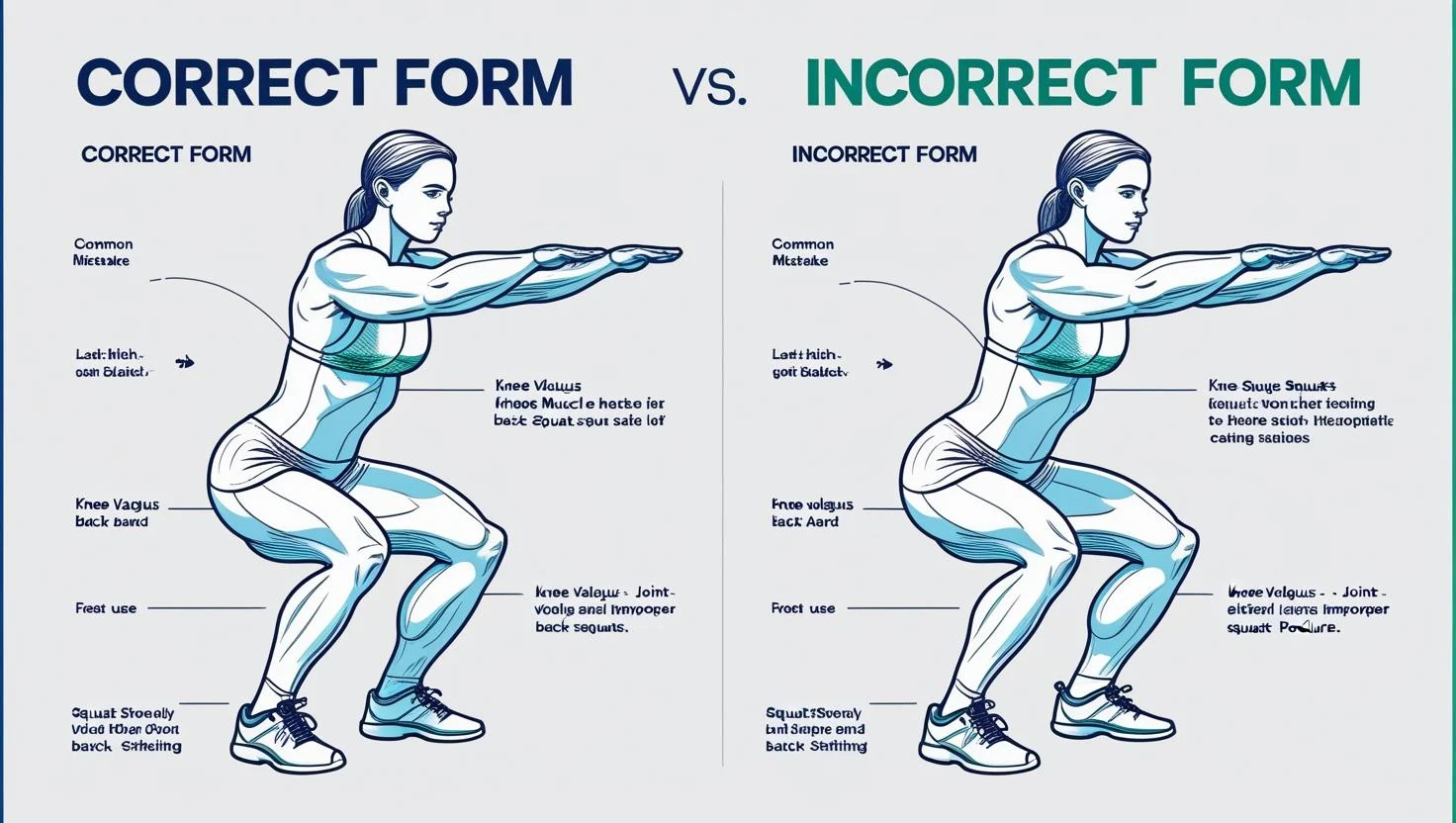
| Back Squats | 5 | 6-8 | 4 minutes | Depth and control |
| Front Squats | 4 | 8-10 | 3 minutes | Upright torso |
| Leg Press | 4 | 12-15 | 2.5 minutes | Full range |
| Bulgarian Split Squats | 3 | 10-12 each | 2 minutes | Balance and control |
| Leg Extensions | 3 | 15-20 | 90 seconds | Peak contraction |
| Romanian Deadlifts | 4 | 8-10 | 2.5 minutes | Hip hinge |
| Calf Raises | 4 | 15-20 | 2 minutes | Full stretch |
Days 4-6: Variation and Intensity
The remaining three days follow similar structures but incorporate exercise variations, different rep ranges, and altered training intensities to prevent adaptation plateaus and maintain progressive overload.
Nutrition for 6-Day Training
Caloric Requirements
Individuals following intensive 6-day schedules require significantly elevated caloric intake to support recovery and growth. The following table outlines approximate daily caloric needs based on training goals:
| Body Weight | Muscle Gain |
|
Fat Loss |
|---|---|---|---|
| 130-150 lbs | 2,800-3,200 | 2,400-2,800 | 2,000-2,400 |
| 150-170 lbs | 3,200-3,600 | 2,800-3,200 | 2,400-2,800 |
| 170-200 lbs | 3,600-4,000 | 3,200-3,600 | 2,800-3,200 |
| 200+ lbs | 4,000+ | 3,600+ | 3,200+ |
Macronutrient Distribution
| Macronutrient | Percentage | Grams per lb bodyweight | Primary Sources |
|---|---|---|---|
| Protein | 25-30% | 1.2-1.6g | Lean meats, fish, eggs, dairy |
| Carbohydrates | 40-45% | 2.0-3.0g | Rice, oats, fruits, vegetables |
| Fats | 25-30% | 0.5-0.8g | Nuts, oils, avocado, fish |

Pre and Post-Workout Nutrition
Pre-Workout (1-2 hours before)
- Complex carbohydrates for sustained energy
- Moderate protein for muscle preparation
- Minimal fat and fiber to prevent digestive issues
Post-Workout (within 30 minutes)
- Fast-digesting protein for muscle protein synthesis
- Simple carbohydrates for glycogen replenishment
- Electrolyte replacement for hydration
Recovery and Rest Strategies
Sleep Optimization
Quality sleep becomes non-negotiable with 6-day training schedules. Adults require 7-9 hours nightly, but intensive trainees often benefit from 8-10 hours for optimal recovery.
| Sleep Factor | Recommendation | Impact on Recovery |
|---|---|---|
| Duration | 8-10 hours | Muscle repair and growth hormone release |
| Consistency | Same bedtime/wake time | Circadian rhythm optimization |
| Environment | Cool, dark, quiet | Deep sleep quality |
| Pre-sleep routine | No screens 1 hour before | Melatonin production |
Active Recovery Techniques
| Recovery Method | Frequency | Duration | Benefits |
|---|---|---|---|
| Light walking | Daily | 20-30 minutes | Blood flow enhancement |
| Stretching | 2-3x weekly | 15-20 minutes | Flexibility maintenance |
| Foam rolling | Daily | 10-15 minutes | Myofascial release |
| Massage | Weekly | 60 minutes | Deep tissue recovery |

Common Mistakes and How to Avoid Them
Overreaching and Overtraining
The intensity of 6-day schedules creates significant overreaching risk. Individuals must distinguish between productive overreaching and detrimental overtraining.
| Warning Signs | Immediate Actions | Prevention Strategies |
|---|---|---|
| Persistent fatigue | Reduce volume 20-30% | Regular deload weeks |
| Declining performance | Add extra rest day | Monitor training loads |
| Mood changes | Prioritize sleep | Stress management |
| Frequent illness | Improve nutrition | Adequate protein intake |
Inadequate Recovery Planning
Many enthusiasts focus exclusively on training while neglecting recovery protocols. This imbalance inevitably leads to stagnation or regression.
Poor Exercise Selection
Compound movements should form the foundation of 6-day programs. Isolation exercises serve as accessories, not primary drivers of development.
Progression Strategies
Linear Progression
Beginners can employ simple linear progression by adding weight consistently:
| Week | Weight Increase | Rep Range Adjustment |
|---|---|---|
| 1-2 | Establish baseline | 8-12 reps |
| 3-4 | +5-10 lbs | 6-10 reps |
| 5-6 | +5-10 lbs | 8-12 reps |
| 7-8 | Deload -20% | 12-15 reps |
Periodization Models
Advanced trainees require more sophisticated progression schemes:
Block Periodization
- Accumulation Phase: High volume, moderate intensity (4 weeks)
- Intensification Phase: Moderate volume, high intensity (3 weeks)
- Realization Phase: Low volume, peak intensity (1 week)
Daily Undulating Periodization
Varies intensity and volume within each week, preventing adaptation plateaus while maintaining consistent stimulus variation.
Who Should Follow a 6-Day Schedule?
Ideal Candidates
Advanced Intermediate to Advanced Lifters
Individuals with 2-3+ years of consistent training experience possess the work capacity and recovery ability necessary for 6-day schedules.
Dedicated Enthusiasts
Those who can commit 60-90 minutes daily to training and prioritize recovery protocols in their lifestyle.
Individuals with Specific Goals
Competitive bodybuilders, powerlifters, or athletes requiring maximum development benefit most from high-frequency training.
Who Should Avoid This Schedule
| Category | Reasons | Alternative Recommendations |
|---|---|---|
| Beginners | Insufficient recovery capacity | 3-4 day full-body routines |
| Time-constrained individuals | Cannot maintain consistency | Upper/lower or push/pull splits |
| High-stress lifestyles | Additional training stress problematic | 3-day routines with emphasis on recovery |
| Poor sleep patterns | Recovery already compromised | Address sleep before intensifying training |
Customization and Modifications
Age-Based Adjustments
Young Adults (18-25)
Can typically handle maximum training volumes with faster recovery rates.
Middle-Aged (26-40)
May require additional recovery time and stress management considerations.
| Age Group | Volume Adjustment | Recovery Emphasis |
|---|---|---|
| 18-25 | 100% | Standard protocols |
| 26-35 | 90-95% | Enhanced sleep focus |
| 36-45 | 85-90% | Stress management priority |
| 45+ | 80-85% | Joint health emphasis |
Gender-Specific Considerations
Male Adaptations
Generally higher training volumes and shorter recovery periods between sessions.
Female Adaptations
May benefit from periodizing training around menstrual cycles and potentially require different recovery strategies.

Equipment Requirements
Essential Equipment
| Equipment Category | Specific Items | Priority Level |
|---|---|---|
| Barbells | Olympic barbell, EZ-curl bar | High |
| Dumbbells | Full range 5-100+ lbs | High |
| Machines | Cable system, leg press, lat pulldown | Medium |
| Accessories | Resistance bands, foam roller | Medium |
| Cardio | Treadmill, bike, or rower | Low |
Home Gym Adaptations
For those training at home, the 6-day schedule can be modified using bodyweight exercises, resistance bands, and adjustable dumbbells, though equipment limitations may reduce overall effectiveness.
Safety Considerations
Injury Prevention Protocols
Proper Warm-up Sequences
Every session must begin with dynamic movements specific to the day’s training focus.
Form Over Weight
Technical proficiency takes precedence over load progression, especially during high-frequency training periods.
Listen to Your Body
Daily assessment of readiness helps prevent training through excessive fatigue or minor injuries.
Emergency Protocols
| Situation | Immediate Response | Follow-up Actions |
|---|---|---|
| Acute pain | Stop exercise immediately | Medical evaluation if persistent |
| Excessive fatigue | Reduce intensity 50% | Extra rest day |
| Joint discomfort | Alternative exercise selection | Monitor for 24-48 hours |

Sample 4-Week Progression
Week 1: Foundation Building
- Focus on form and movement patterns
- Moderate loads (70-75% of max)
- Full prescribed volumes
Week 2: Intensity Increase
- Load increases of 5-10%
- Maintain repetition ranges
- Monitor recovery closely
Week 3: Peak Volume
- Maximum prescribed volumes
- Peak loads for rep ranges
- Emphasis on technique maintenance
Week 4: Deload Recovery
- Volume reduction of 40-50%
- Active recovery emphasis
- Preparation for next cycle
Advanced Techniques Integration
Intensity Techniques
| Technique | Application | Frequency | Purpose |
|---|---|---|---|
| Drop sets | Last set of isolation exercises | 1-2x per workout | Muscle exhaustion |
| Rest-pause | Compound movements finale | 1x per workout | Volume extension |
| Supersets | Antagonist muscle pairings | 2-3x per workout | Time efficiency |
| Cluster sets | Heavy compound movements | 1x per exercise | Strength focus |
Periodization Integration
Advanced practitioners can layer additional periodization strategies onto the 6-day framework, including conjugate methods, block periodization, or daily undulating approaches.

Personal Experience and Results
After implementing various 6-day schedules over several years, the most significant observation involves the necessity of gradual progression into such intensive routines. Initial attempts often resulted in overreaching within 3-4 weeks, highlighting the importance of preparatory phases.
The most successful implementations occurred when individuals had established solid foundations with 4-5 day routines before advancing to 6-day schedules. Recovery protocols proved equally important as the training itself, with sleep quality and nutrition consistency determining long-term sustainability.
Results typically become apparent after 6-8 weeks of consistent implementation, with strength gains preceding visible physique changes. The psychological aspect of daily training creates momentum that many find beneficial for maintaining long-term consistency.
Frequently Asked Questions
Is a 6-day workout schedule suitable for beginners?
Generally not recommended. Beginners benefit more from 3-4 day full-body routines that allow adequate recovery while building foundational strength and movement patterns.
How long should someone follow a 6-day schedule?
Most individuals benefit from 8-12 week cycles followed by deload periods or alternative programming to prevent staleness and overreaching.
Can cardio be added to a 6-day weight training schedule?
Yes, but carefully. Low-intensity steady-state cardio can be added on training days post-workout or as separate sessions, while high-intensity cardio should be limited and strategically placed.
What if I miss a day during the 6-day schedule?
Simply continue with the next scheduled workout. Avoid attempting to “make up” missed sessions by combining workouts, as this defeats the purpose of the split system.
Conclusion
The 6-day gym workout schedule represents the pinnacle of training frequency for dedicated fitness enthusiasts. When properly implemented, 6-day workout splits can be remarkably effective for muscle growth. Success with such intensive programming requires meticulous attention to recovery, nutrition, and progressive overload principles.
While not suitable for everyone, those who can maintain consistency with 6-day schedules often experience accelerated progress in both strength and physique development. The key lies in honest self-assessment of recovery capacity, lifestyle factors, and long-term sustainability.
Remember that the best workout schedule is one that can be maintained consistently over months and years. For many, a well-designed 4-5 day routine may prove more beneficial than an unsustainable 6-day approach. Consider your individual circumstances, recovery capacity, and long-term goals when deciding whether to implement a 6-day gym workout schedule.