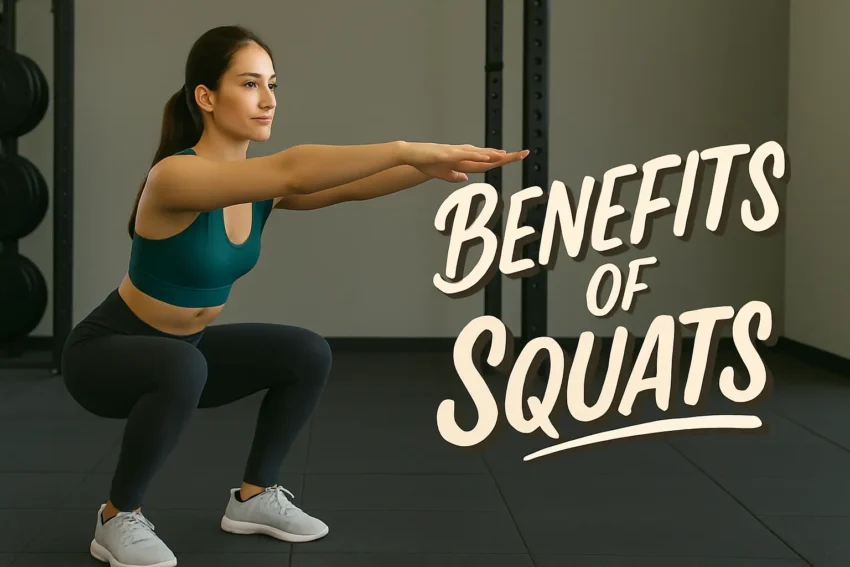
Squats are one of the most powerful and scientifically proven exercises for improving strength, mobility, and overall fitness. Whether your goal is muscle gain, fat loss, athletic performance, or better daily movement, squats offer unmatched benefits for every fitness level.
What Are Squats?
A squat is a lower-body exercise where you bend your hips and knees to lower your body and then stand back up.
It targets multiple muscles at the same time, including:
- Quadriceps
- Hamstrings
- Glutes
- Calves
- Core and lower back
This makes squats one of the most efficient full-body functional movements.
Top Benefits of Squats (Science-Backed)
1. Builds Stronger Lower-Body Muscles
Studies show squat training increases:
- Thigh muscle size
- Knee extensor strength (up to 16%)
- Glute activation and growth
Stronger legs help with walking, climbing stairs, sports performance, and overall physical power.
2. Strengthens the Core and Improves Stability
Your core works hard during squats to stabilize the spine.
Benefits include:
- Better posture
- Improved balance
- Reduced lower-back pain
- More controlled movement in daily life
3. Improves Mobility and Flexibility
Squats train multiple joints—hips, knees, ankles, and spine—to move properly.
This enhances:
- Functional movement
- Joint mobility
- Flexibility
- Range of motion
You’ll feel the difference in everyday activities like sitting, standing, and lifting.
4. Burns Calories and Supports Fat Loss
Squats activate large muscle groups, increasing calorie burn and metabolic rate.
Benefits:
- Faster fat loss
- Better body composition
- Increased lean muscle mass
This makes squats ideal for weight-loss workouts.
5. Strengthens Bones and Protects Joints
Squats improve:
- Bone density
- Tendon strength
- Ligament durability
This reduces long-term risks of:
- Osteoporosis
- Weak joints
- Age-related mobility issues
When performed with proper form, squats are safe for the knees and hips.
6. Enhances Athletic Performance
Athletes use squats to boost:
- Jump height
- Sprint speed
- Acceleration
- Power output
- Agility and balance
Research shows squats outperform leg-press machines for developing real-world athletic power.
7. Improves Daily Functional Movement
Squats mimic everyday actions:
- Sitting
- Standing
- Picking things up
- Climbing stairs
Regular squatting makes daily tasks easier and reduces injury risk.
8. Supports Heart Health and Hormonal Balance
High-rep or weighted squats can:
- Improve blood flow
- Raise heart rate
- Stimulate growth hormone
- Boost metabolism
This supports better cardiovascular and hormonal health.
9. Easy to Start — Suitable for All Fitness Levels
You can choose the variation that suits your level:
- Bodyweight Squat – beginners
- Goblet Squat – great for form + core
- Sumo Squat – more glute activation
- Split Squat – balance + stability
- Back & Front Squat – strength + muscle growth
No equipment needed to start.
10. Tones the Body and Improves Appearance
Squats help shape and tone:
- Legs
- Glutes
- Core
- Hips
They also improve posture, boost confidence, and enhance overall physique.
How to Do a Proper Squat (Step-by-Step)
- Stand with feet shoulder-width apart.
- Keep your chest up and core engaged.
- Push your hips back as if sitting on a chair.
- Bend your knees and lower your body.
- Go until thighs are parallel (or deeper if you can).
- Drive through your heels to stand back up.
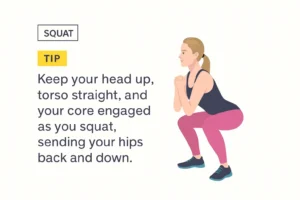
Tip: Keep knees aligned with toes and avoid rounding your lower back.
How Many Squats Should You Do?
- Beginners: 3 sets × 10–15 reps
- Intermediate: 4 sets × 8–12 reps (with weights)
- Fat Loss: 20–30 reps or circuit style
- Muscle Growth: 6–12 reps with moderate to heavy weight
- Athletes: 3–5 sets of 3–6 heavy reps
Common Squat Mistakes to Avoid
❌ Knees collapsing inward
❌ Heels lifting off the floor
❌ Bending the back
❌ Leaning too far forward
❌ Not going deep enough
Correcting these mistakes improves safety and results.
Who Should Be Careful With Squats?
People with:
Should consult a physiotherapist before heavy squatting.
Conclusion
Squats are the king of lower-body exercises — and for good reason.
They build strength, improve balance, enhance mobility, shape your body, support heart health, and make everyday movement easier.
Whether you’re a beginner or an advanced athlete, adding squats to your weekly routine can dramatically improve your fitness and long-term health.
Related topics:
Squats, Variations, and Muscles Worked