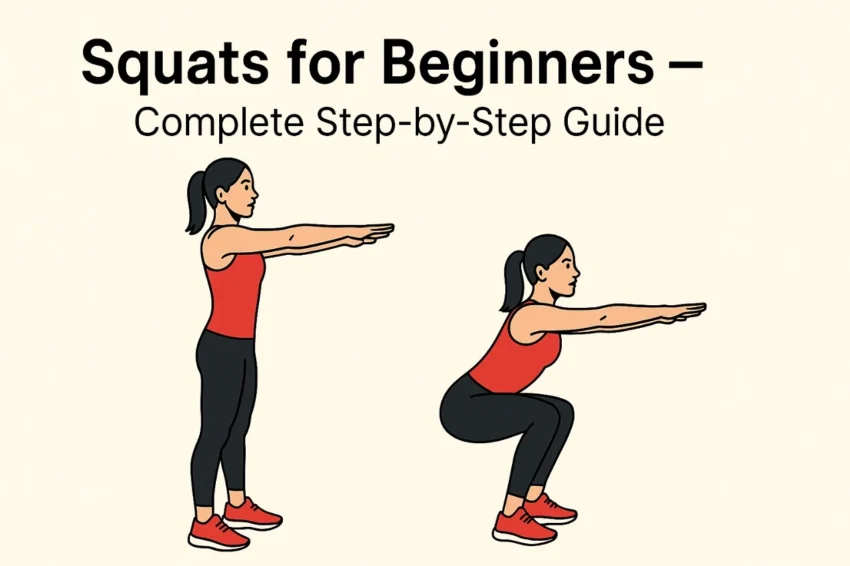
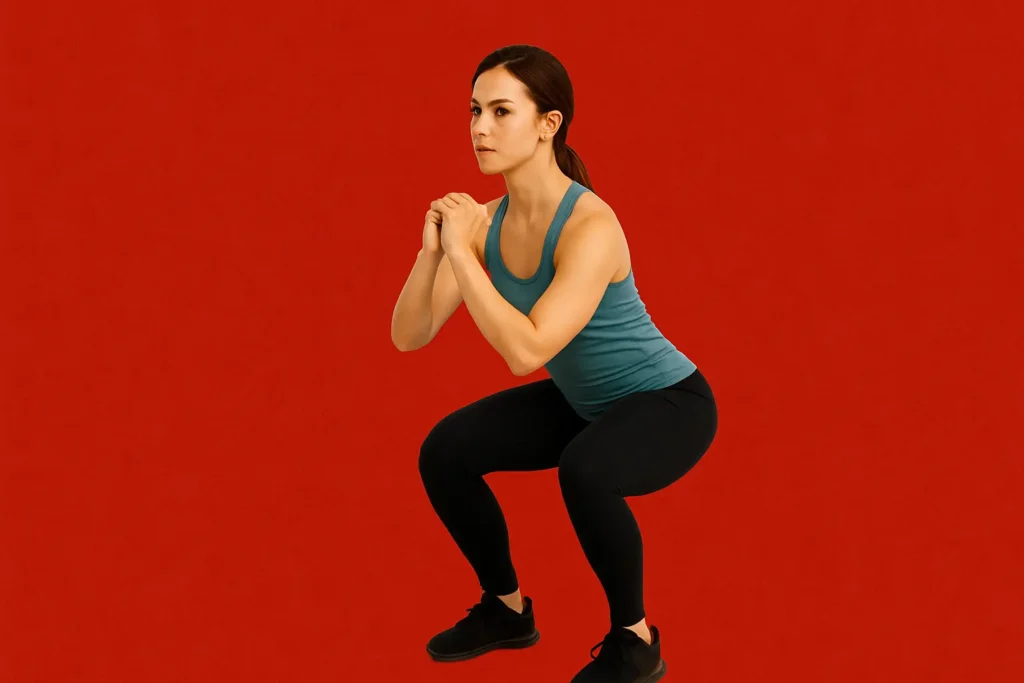
A squat is a basic lower-body exercise where you bend your knees and hips to lower your body, then stand back up. Squats strengthen the legs, glutes, and core, improve balance, and help with fat loss.
What Are Squats?
Squats are a compound strength exercise that works multiple muscle groups at the same time. They copy natural movements like sitting, standing, lifting, and walking, making them one of the most functional exercises for beginners.
Benefits of Squats for Beginners
- Builds strong legs and glutes
- Improves posture and balance
- Strengthens the core
- Boosts metabolism
- Helps with weight loss
- Enhances joint mobility
- Improves daily movement performance
Muscles Worked During Squats
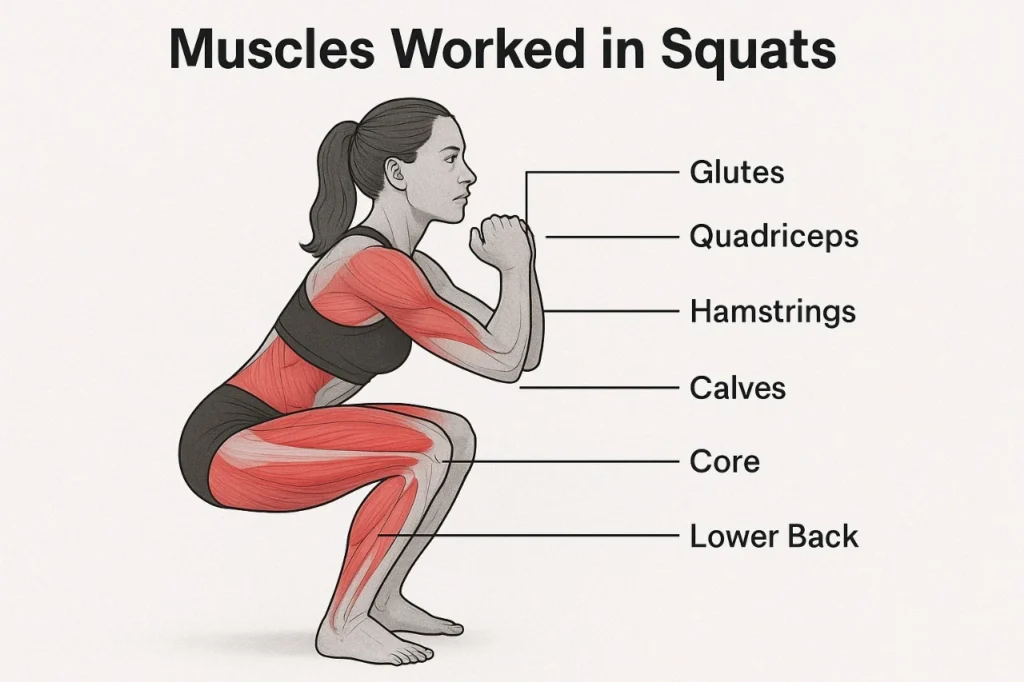
Squats activate your entire lower body and stabilizing muscles:
- Quadriceps – front thighs
- Glutes – hips and butt
- Hamstrings – back thighs
- Adductors – inner thighs
- Calves – ankle support
- Core & Lower Back – posture and balance
This full-body activation is why squats are considered a foundation exercise.
How to Do a Squat Correctly (Beginner Form Guide)
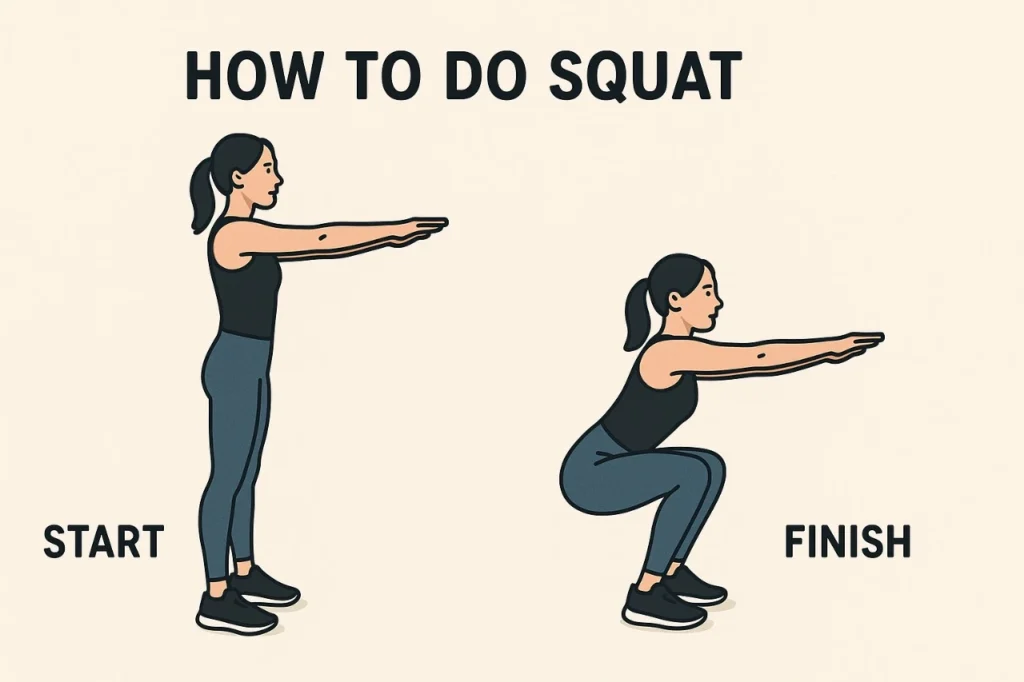
- Stand with feet shoulder-width apart
- Keep chest up and core tight
- Push hips slightly backward
- Bend knees and lower slowly
- Keep heels flat on the floor
- Lower until thighs are parallel
- Push through heels to return up
Essential Warm-Up Before Squats
Warming up reduces injury risk:
- 30 seconds marching or jumping jacks
- 15 hip circles
- 20 bodyweight half squats
- 30-second hamstring stretch
1. Bodyweight Squat
Perfect starting point for all beginners.
2. Chair Squat
Ideal for seniors, overweight users, and rehab.
3. Wall Squat
Improves posture and control.
4. Goblet Squat
Teaches proper depth with light weight.
4-Week Beginner Squat Workout Plan
| Week | Sets | Reps | Days Per Week |
| 1 | 2 | 10 | 3 |
| 2 | 3 | 12 | 3 |
| 3 | 3 | 15 | 3 |
| 4 | 4 | 20 | 3 |
Common Squat Mistakes & How to Fix Them
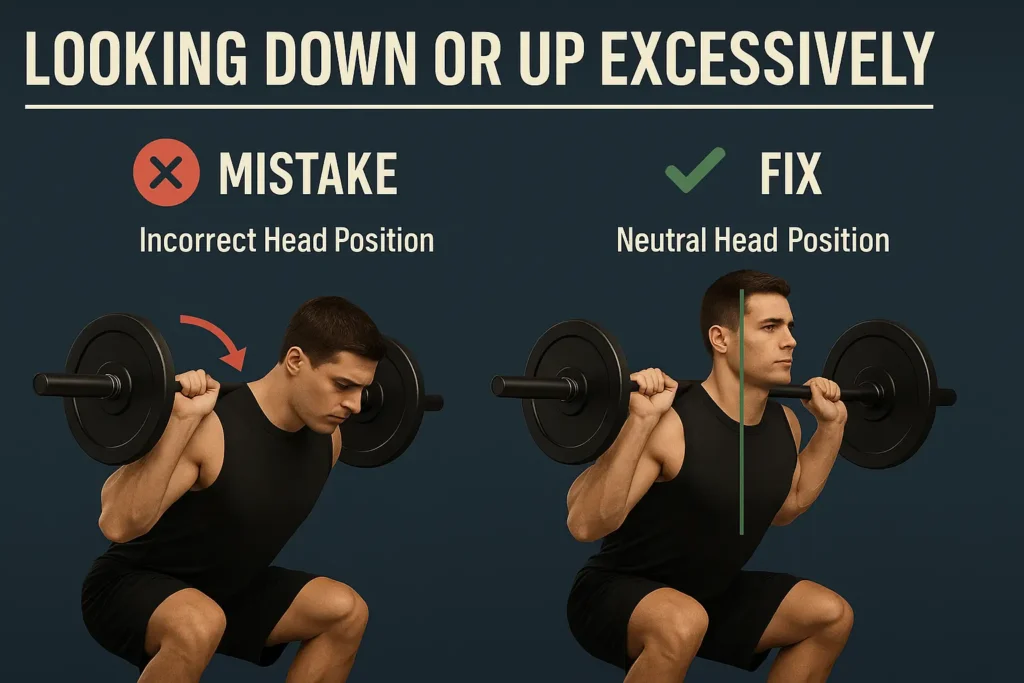
| Mistake | Fix |
| Knees collapsing inward | Push knees outward |
| Rounded lower back | Brace your core |
| Heels lifting | Shift weight backward |
| Shallow squat depth | Improve hip mobility |
| Fast reps | Slow and controlled movement |
Want to fix your form? Check out Common Squat Mistakes in detail.
How Many Squats Should a Beginner Do?
- First week: 10–15 reps
- After 2 weeks: 20–30 reps
- After 1 month: 40–50 reps
✅ Focus on correct form, not high numbers
When Will You See Results from Squats?
- 7–10 days: Strength improvement
- 3 weeks: Visible toning
- 6–8 weeks: Fat loss & posture changes
Squats for Weight Loss (Fat-Burning Benefits)
Squats increase muscle mass, boost metabolism, and burn calories. When combined with a proper diet, they significantly help reduce body fat including belly fat.
Are Squats Safe for Beginners?
Yes, squats are safe when done correctly.
However, avoid or consult a doctor if you have:
- Knee injury
- Slip disc
- Recent surgery
- Chronic joint pain
Squats vs Other Leg Exercises
| Exercise | Main Benefit |
| Squats | Full lower-body strength |
| Lunges | Balance + muscle isolation |
| Leg Press | Machine-based safety |
| Walking | Heart health |
Squats remain the most effective all-in-one leg exercise.
Squats for Special Groups
- Teenagers: Safe with correct form
- Seniors: Use chair squats
- Overweight users: Start with wall squats
- Women: Excellent for hips & glutes
- Home workouts: No equipment needed
FAQ – Squats for Beginners
1. What is the best squat for beginners?
The bodyweight squat is the best option for beginners because it builds strength, balance, and proper movement without adding extra weight.
2. How many squats should a beginner do daily?
A beginner should start with 10–15 squats per day. After two weeks, increase to 20–30 squats, based on comfort and strength.
3. Can I do squats every day?
Yes, you can do light bodyweight squats daily, but for muscle recovery, it’s better to train 3–5 days per week with rest days.
4. Are squats safe for beginners?
Yes, squats are 100% safe for beginners when performed with correct form and without heavy weights.
- Do squats reduce belly fat?
Squats help burn calories and build muscle, which supports fat loss. However, belly fat reduction also depends on diet and overall activity level.
6. Can I do squats at home without equipment?
Yes, bodyweight squats require no equipment and can easily be done at home.
7. Are squats bad for knees?
No, squats are not bad for knees if done correctly. Knee pain usually comes from wrong form or lack of warming up.
8. When will I start seeing results from squats?
- 7–10 days: Strength improvement
- 3–4 weeks: Muscle toning
- 6–8 weeks: Visible body shape changes
9. Are squats good for weight loss?
Yes, squats increase metabolism and burn calories. When combined with a controlled diet, they help with healthy weight loss.
10. Can teenagers do squats?
Yes, teenagers can safely do squats using proper form and light resistance under guidance.
11. Are squats safe for seniors?
Yes, seniors can do chair squats or wall squats for support and safety.
Final Conclusion
Squats are one of the most powerful beginner exercises you can do. They strengthen your legs, improve posture, enhance balance, burn fat, and build total-body strength. With proper form, consistency, and smart progression, squats can completely transform your fitness.
Related topics:
Types of Squats and When to Use Each
Common Squat Mistakes and How to Fix Them
Squat Depth
How Much Weight Should You Use for Squats?
Common Squat Mistakes and How to Fix Them
Benefits of Squats, Variations, and Muscles Worked
Muscles Worked During Squats