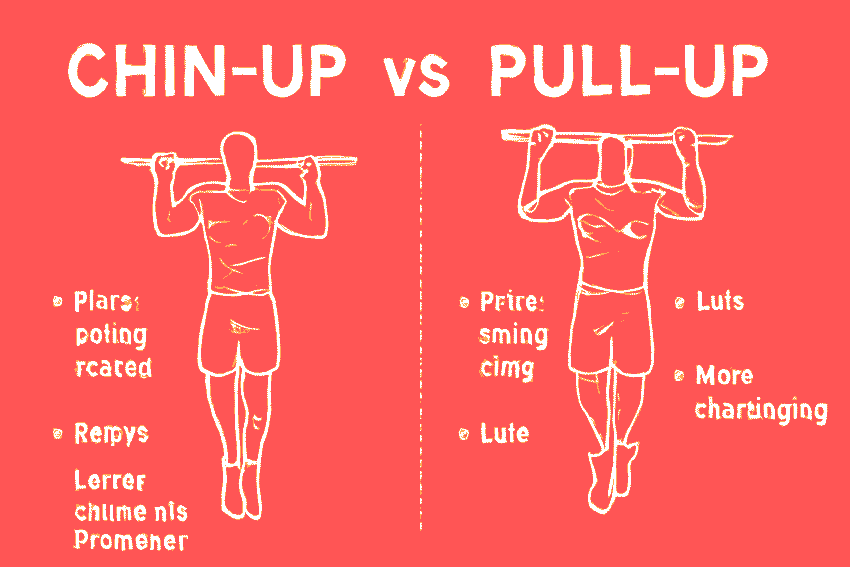
When it comes to building upper body strength, few exercises are as effective and versatile as Chin-up vs Pull-up. Both exercises are staples in strength training routines, but many people are confused about their differences and how to incorporate them into their workout plans. While chin-ups and pull-ups might look similar, they have distinct benefits and target different muscles in the body.
In this article, we’ll break down the differences between chin-ups and pull-ups, explore the unique benefits of each, and help you decide which exercise is best for your fitness goals.
| Chin-Up | Pull-Up |
|---|---|
| Grip | Palms facing you (underhand) |
| Hand Position | Supinated grip |
| Primary Muscles | Biceps + back |
| Difficulty | Easier for beginners |
| Bicep Involvement | High |
| Lat Focus | Moderate |
| Grip Width | Usually shoulder-width |
What is a Chin-Up?
Definition
A chin-up is an upper-body strength exercise that involves pulling your body up using a bar, with your palms facing towards you (a palms-facing-toward grip). This movement is primarily focused on building arm strength, especially in the biceps, while also engaging the back and shoulders.
Grip Explanation
In a chin-up, your hands are placed closer together with your palms facing towards you. This palms-facing-toward grip allows for more involvement of the biceps compared to other bodyweight exercises.
Target Muscles
Biceps: Chin-ups are incredibly effective for strengthening the biceps.
Forearms: The palms-facing-toward grip also works the forearms, helping to improve grip strength.
Shoulders & Upper Back: While chin-ups mainly focus on the biceps, they also work the shoulders and upper back muscles.
Benefits of Chin-Ups
Great for Bicep Development: Chin-ups are ideal for building biceps and improving arm strength.
Lower Impact on Shoulders: Chin-ups place less strain on the shoulders compared to pull-ups, making them a great option for people with shoulder concerns.
Beginner-Friendly: Since chin-ups are typically easier than pull-ups, they are a great starting point for beginners in bodyweight exercises.
What is a Pull-Up?
Definition
A pull-up is a similar upper-body exercise, but with a pronated grip (palms facing away from you), making it more challenging than chin-ups. Pull-ups are excellent for strengthening the upper back and lats, as well as improving overall upper body strength.
Grip Explanation
In a pull-up, the hands are placed shoulder-width apart with palms facing away from the body. This pronated grip engages different muscle groups, particularly the back.
Target Muscles
Lats (Latissimus Dorsi): Pull-ups are primarily effective for targeting the lats, which are crucial for back strength.
Biceps: Though secondary to the lats, the biceps still play a role in the movement.
Shoulders & Forearms: Pull-ups also target the shoulders and forearms, contributing to overall upper body strength.
Benefits of Pull-Ups
Improved Upper Back Strength: Pull-ups focus on building strength in the lats, improving posture and overall back strength.
Increased Grip Strength: The pronated grip of a pull-up requires a stronger grip, which also strengthens the forearms.
More Challenging: Pull-ups are more difficult than chin-ups, making them a great choice for those looking to take their upper body strength to the next level.
Key Differences Between Chin-Ups and Pull-Ups
1. Grip Position
Chin-ups: Palms facing towards you (supine grip).
Pull-ups: Palms facing away from you (pronated grip).
2. Muscle Engagement
Chin-ups: Focus on the biceps, with secondary engagement of the upper back and shoulders.
Pull-ups: Focus on the lats and upper back, with secondary engagement of the biceps and forearms.
3. Difficulty Level
Chin-ups: Easier for beginners due to the palms-facing-toward grip.
Pull-ups: More challenging due to the pronated grip and emphasis on back muscles.
4. Shoulder and Elbow Involvement
Chin-ups: Less strain on the shoulders and elbows, making them safer for those with joint concerns.
Pull-ups: Require more mobility in the shoulders and elbows, which can be more demanding on these joints.
Which Exercise Should You Choose?
For Strength Training
Chin-ups: Best for building arm strength, particularly in the biceps. Great for beginners who are just starting to focus on upper body exercises.
Pull-ups: Best for developing back strength and overall upper body strength. Ideal for those who want a more challenging exercise targeting the lats.
For Overall Upper Body Development
If you want a more balanced upper-body workout, incorporating both chin-ups and pull-ups into your routine is a great strategy. Chin-ups will help develop your biceps, while pull-ups will focus on your back and shoulders.
For Beginners vs Advanced Athletes
Chin-ups are generally easier for beginners because they require less upper back strength and focus more on the biceps.
Pull-ups are a more advanced exercise that requires more strength in the back, shoulders, and arms. Once you’ve mastered chin-ups, you can progress to pull-ups to continue building your upper body strength.
Chin-up vs Pull-up | Which One Is Better For You?
Want to dive deeper into the differences between Pull-Ups vs Chin-Ups ? Watch the video below to explore the detailed comparison and learn which exercise is better suited for your fitness goals
How to Progress: A Step-by-Step Plan
1. Start with Assisted Chin-Ups
Use a resistance band or an assisted pull-up machine to help lift part of your body weight and complete the movement.
2. Build Bicep Strength
Incorporate exercises like bicep curls and lat pull-downs into your routine to build strength that will make chin-ups easier.
3. Progress to Pull-Ups
Once you’re comfortable with chin-ups, start practicing pull-ups. If necessary, begin with assisted pull-ups to gradually build the necessary strength in your back and shoulders.
4. Focus on Core Engagement
Both chin-ups and pull-ups require core stability to maintain proper form. Engage your core during both exercises to improve your performance and prevent injuries.
Conclusion
Chin-ups and pull-ups are two of the most effective upper-body exercises you can do, each with its own unique set of benefits. Chin-ups are easier for beginners and focus more on bicep development, while pull-ups are a more advanced movement that targets the back and shoulders. Both exercises play a crucial role in building a strong, functional upper body, and incorporating both into your routine can lead to balanced muscle development.
Whether you’re a beginner or an advanced athlete, mastering both chin-ups and pull-ups will help you achieve your fitness goals and take your upper body strength to the next level.
Call to Action
Ready to challenge your upper body strength? Start with assisted chin-ups to build strength, then challenge yourself with pull-ups to enhance back muscle engagement. Incorporate both exercises into your routine for maximum results and muscle growth!
FAQ
Can I do chin-ups if I’m a beginner?
Yes, chin-ups are generally easier for beginners due to the palms-facing-toward grip.
Are pull-ups better than chin-ups for back muscles?
Yes, pull-ups target the lats more effectively, making them better for back development.
Should I do chin-ups before pull-ups?
You can start with chin-ups to build bicep strength and progress to pull-ups as your back strength improves.