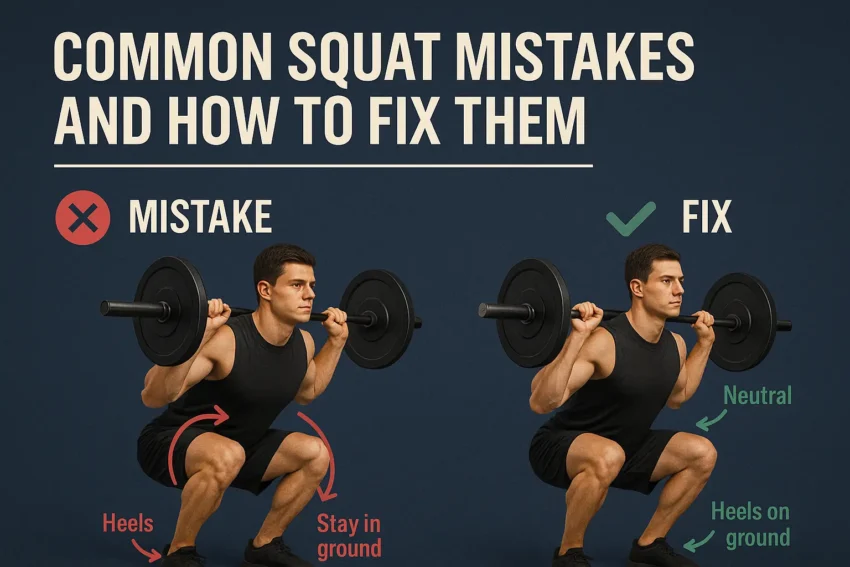
Squats are one of the best exercises for building strong legs, glutes, and core. But doing squats with poor form can lead to injuries, slow progress, and lower results. In this guide, you’ll learn the most common squat mistakes and exactly how to fix them for safer, stronger, and more effective workouts.
1. Knees Caving In (Knee Valgus)
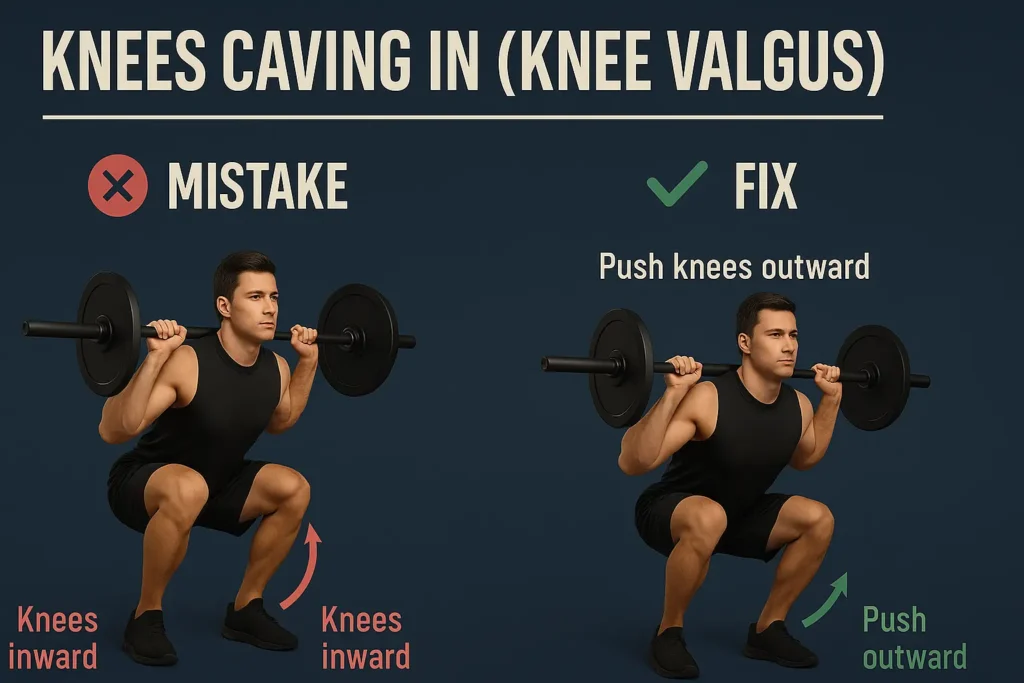
❌ Mistake:
Your knees move inward when you lower or stand up.
✅ Why It’s a Problem:
- Increases risk of knee injury
- Reduces glute activation
- Causes imbalance
✅ Fix:
- Push your knees slightly outward during the full movement
- Strengthen glutes with band walks and clamshells
- Think: “Spread the floor with your feet.”
2. Rounding the Lower Back
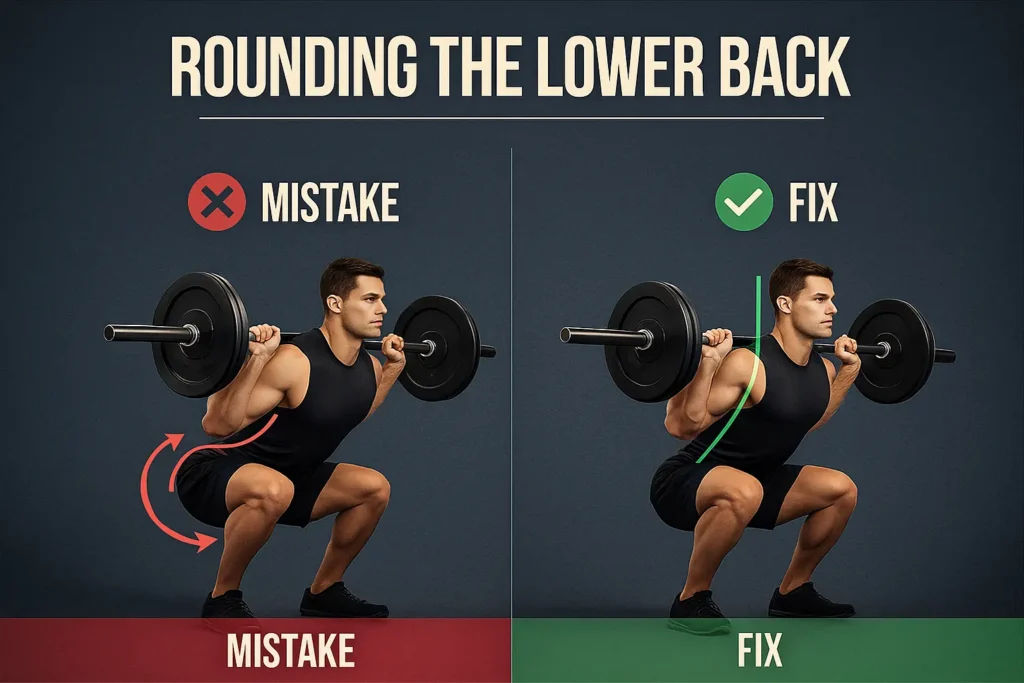
❌ Mistake:
Your lower back curves at the bottom of the squat.
✅ Why It’s a Problem:
- Can cause spinal injury
- Weak core engagement
- Reduces lifting power
✅ Fix:
- Brace your core before descending
- Keep chest proud and spine neutral
- Reduce squat depth until flexibility improves
3. Heels Lifting Off the Floor
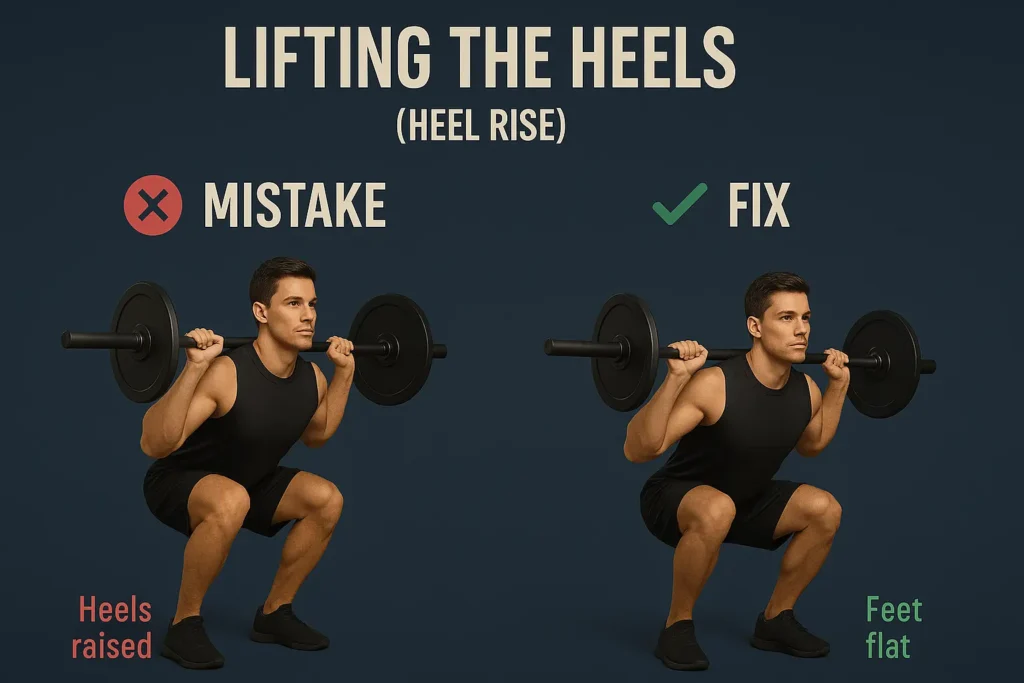
❌ Mistake:
Your heels rise as you go down.
✅ Why It’s a Problem:
- Shifts pressure to knees
- Reduces balance and power
- Shows poor ankle mobility
✅ Fix:
- Work on ankle mobility stretches
- Widen your stance slightly
- Squat while keeping weight on mid-foot and heels
4. Shallow Squats (Not Going Low Enough)
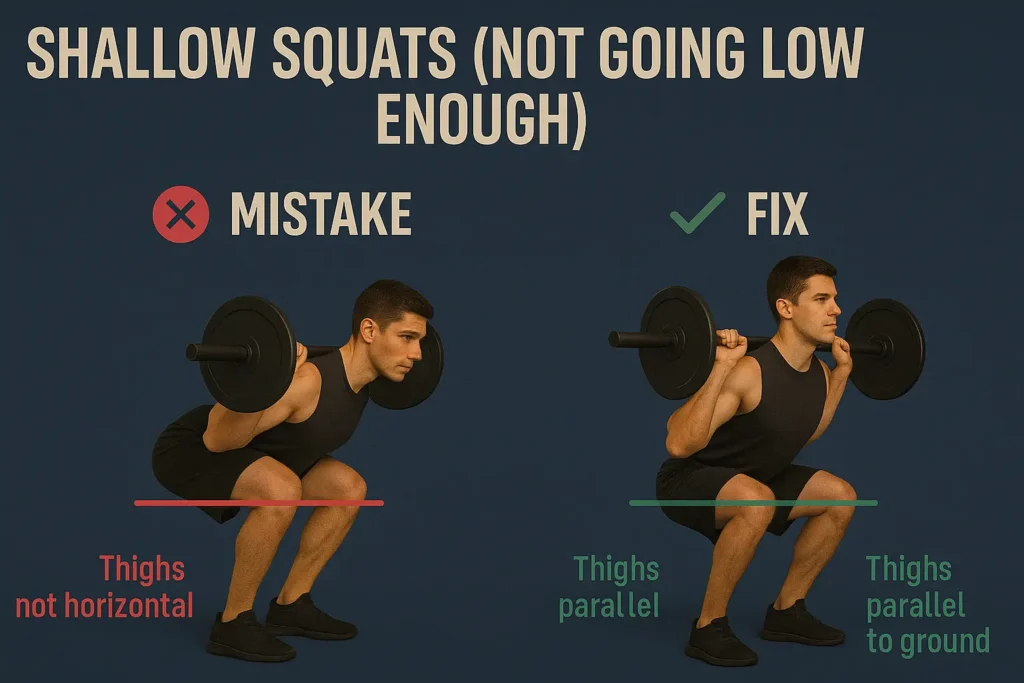
❌ Mistake:
You stop halfway and never reach proper depth.
✅ Why It’s a Problem:
- Less muscle activation
- Slower muscle growth
- Limits strength gains
✅ Fix:
- Aim to reach parallel or below
- Improve hip flexibility
- Use goblet squats to learn proper depth
5. Leaning Too Far Forward
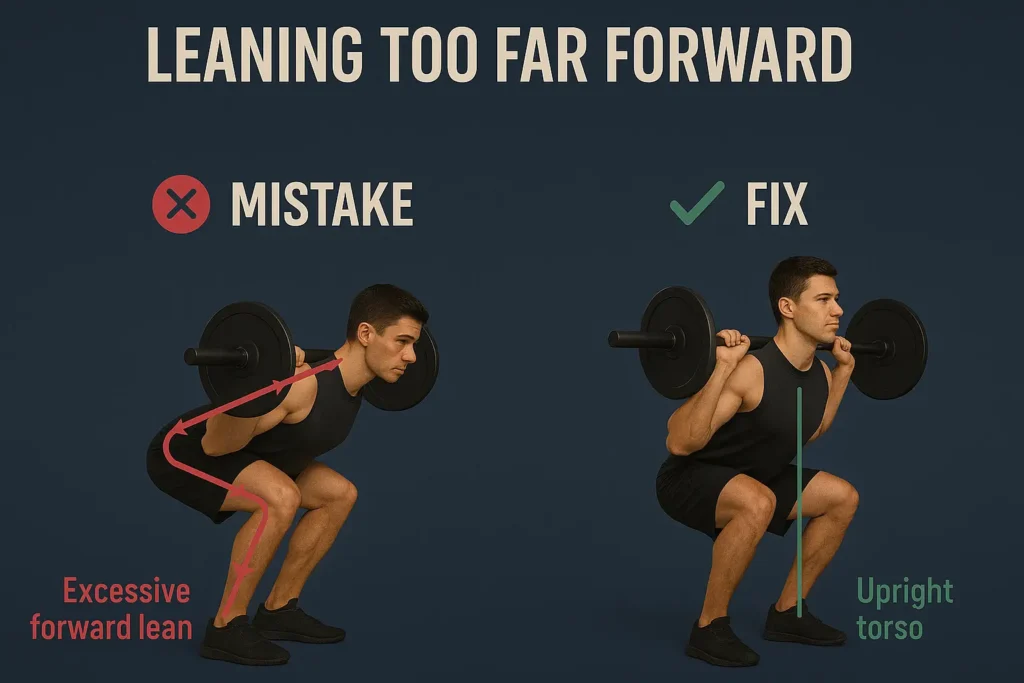
❌ Mistake:
Upper body falls forward during the squat.
✅ Why It’s a Problem:
- Overloads the lower back
- Reduces quad activation
- Increases injury risk
✅ Fix:
- Keep chest up
- Sit “down,” not “forward”
- Strengthen core and upper back
6. Poor Foot Placement
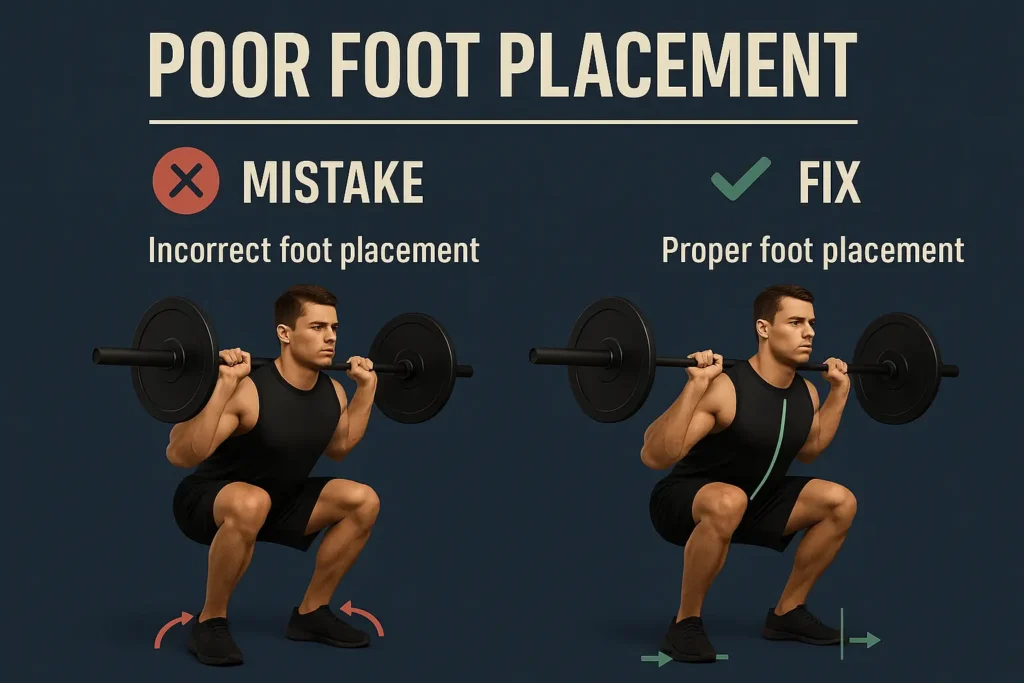
❌ Mistake:
Feet too narrow, too wide, or uneven.
✅ Why It’s a Problem:
- Causes balance issues
- Shifts load incorrectly
- Reduces squat efficiency
✅ Fix:
- Feet shoulder-width apart
- Toes pointed slightly outward
- Keep both feet flat throughout the movement
7. Looking Down or Up Excessively
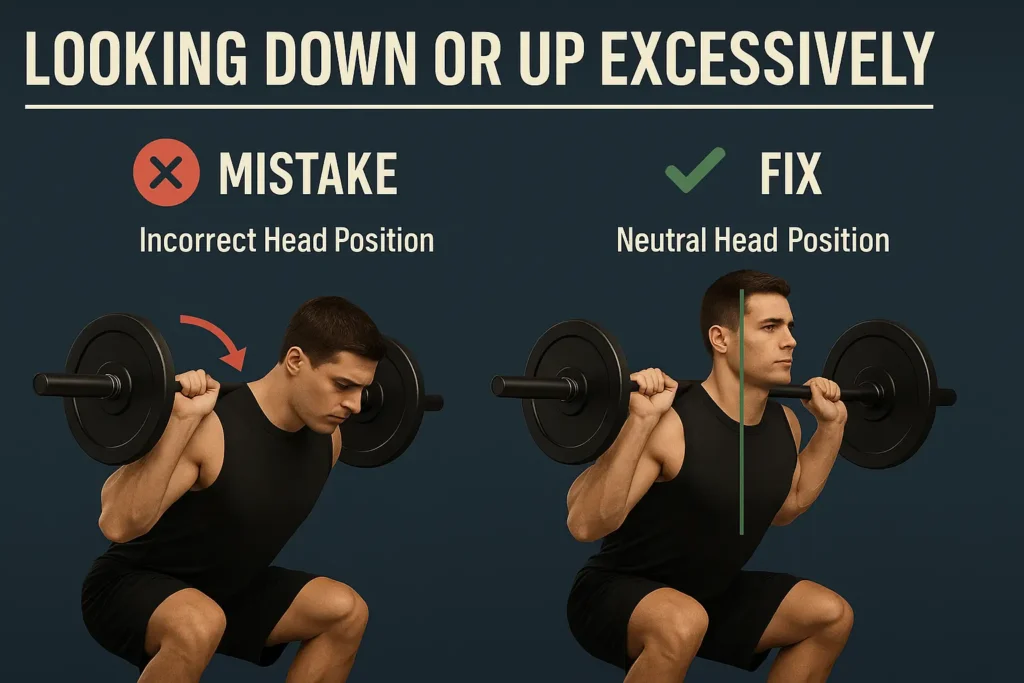
❌ Mistake:
Neck is bent too far down or up.
✅ Why It’s a Problem:
- Breaks spinal alignment
- Causes neck strain
- Affects balance
✅ Fix:
- Look straight ahead or slightly downward
- Keep neck neutral in line with your spine
8. Bouncing at the Bottom
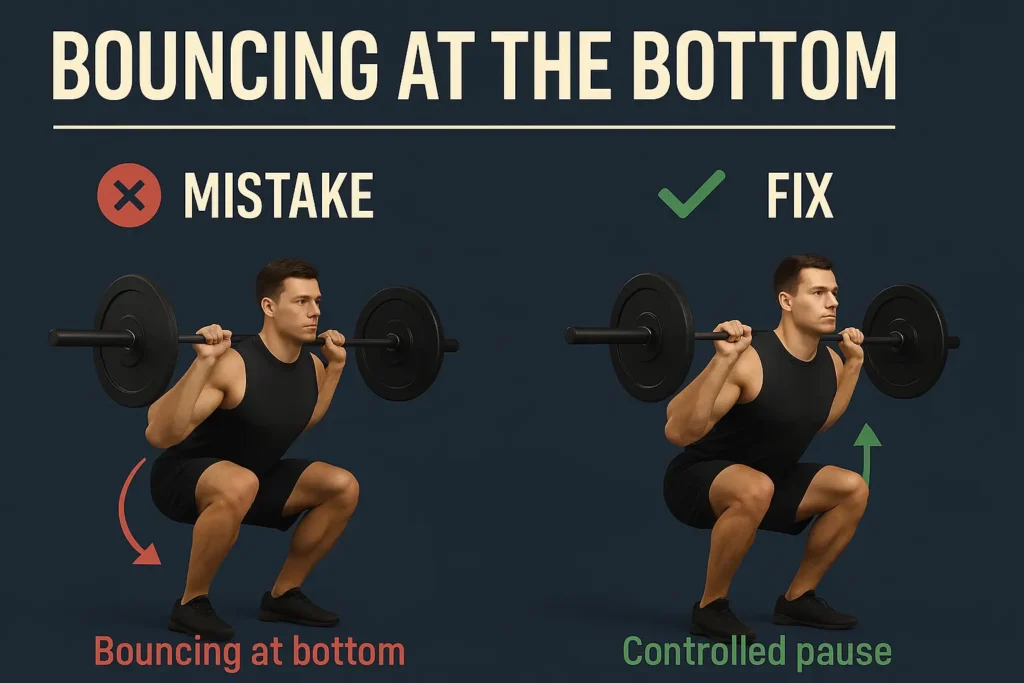
❌ Mistake:
You drop quickly and bounce out of the squat.
✅ Why It’s a Problem:
- Reduces muscle control
- Increases joint stress
- Higher injury risk
✅ Fix:
- Control the descent
- Pause briefly at the bottom
- Drive up with steady force
- Push through your heels to stand up tall.
How to Perform a Perfect Squat (Step-by-Step)
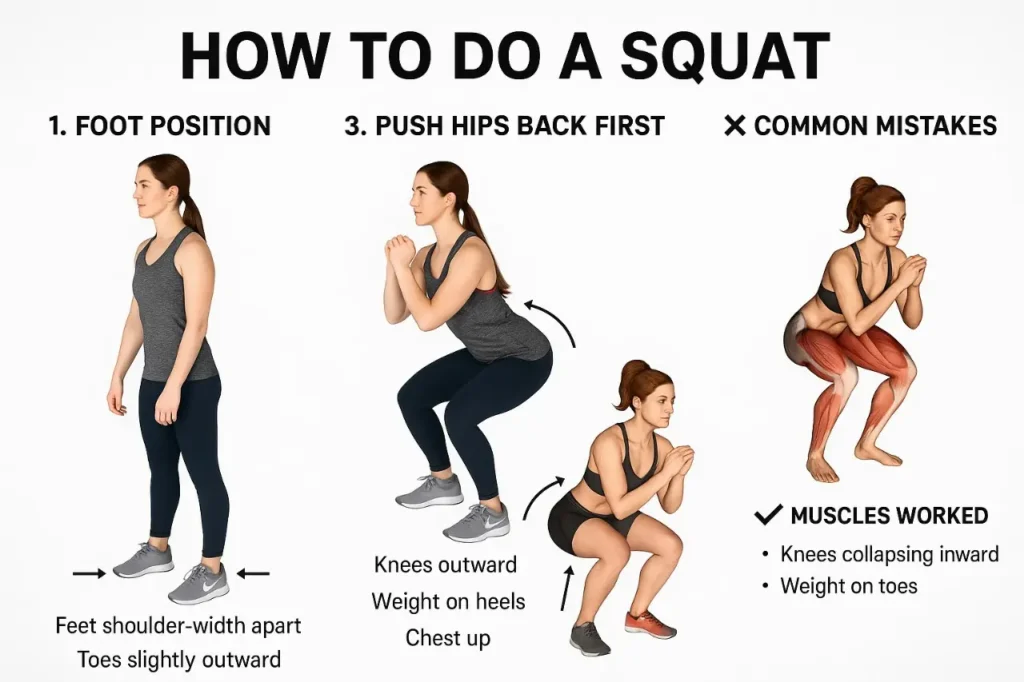
- Stand with your feet shoulder-width apart.
- Point your toes slightly outward (15–30°).
- Brace your core tightly.
- Push your hips back first.
- Bend your knees and lower with control.
- Keep your chest up and spine neutral.
- Lower until your thighs are at least parallel.
- Push through your heels to stand up tall.
FAQs
-
What is the most common squat mistake?
The most common squat mistake is knees caving inward, which can increase the risk of knee injury and reduce glute activation.
-
Is it bad if my heels lift during squats?
Yes, lifting your heels shifts pressure to your knees and shows poor ankle mobility. Always keep your heels flat for safe squatting.
-
How low should I squat?
You should squat until your thighs are at least parallel to the floor. Going lower is safe if you maintain proper form.
-
Why does my back round at the bottom of a squat?
This usually happens due to weak core muscles, tight hips, or poor mobility. Strengthening your core and improving flexibility can fix it.
-
Can squat mistakes cause knee pain?
Yes. Poor form like knee collapse, shallow depth, or excessive forward lean can lead to knee pain and long-term joint issues.
-
How can beginners avoid squat mistakes?
Beginners should start with bodyweight squats, practice in front of a mirror, and focus on slow, controlled movement.
-
How long does it take to fix poor squat form?
With regular practice and mobility work, most people see improvements in 2–4 weeks.
Final Tips for Perfect Squats
✔ Warm up before squatting
✔ Start with bodyweight squats
✔ Use mirrors or record your form
✔ Increase weight gradually
✔ Focus on quality over quantity
Conclusion
Squats are powerful—but only when done correctly. By avoiding these common squat mistakes and applying the right fixes, you’ll build stronger legs, protect your joints, and get better results faster.
Related topics:
Benefits of Squats, Variations, and Muscles Worked