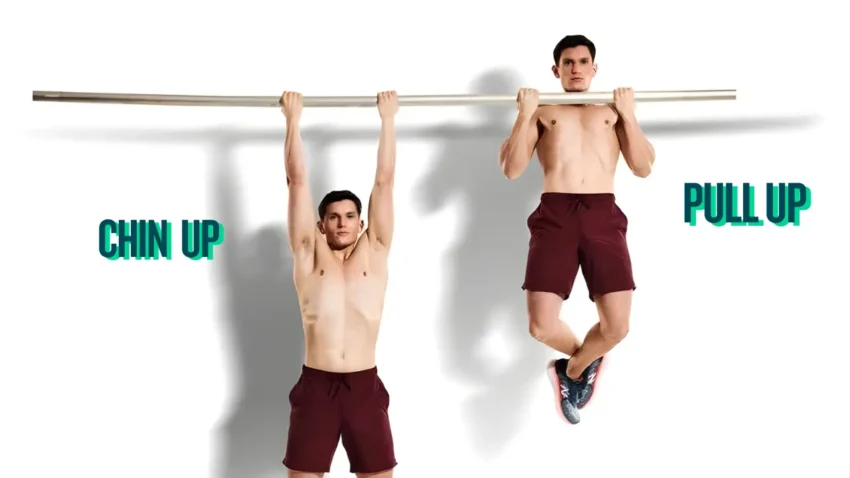
Pullups and chinups look nearly identical, but one simple difference—your hand position—dramatically changes which muscles you build and how challenging the exercise becomes. Understanding this distinction is essential for designing an effective upper body training program.
The Key Difference: Grip Position
The fundamental difference between these exercises is how you grip the bar:
Pullups use an overhand (pronated) grip where your palms face away from you. Your hands are typically positioned at shoulder-width or slightly wider.
Chinups use an underhand (supinated) grip where your palms face toward you. Your hands are usually at shoulder-width or slightly narrower.
This grip variation changes the biomechanics of the movement and shifts emphasis between muscle groups.
Muscles Worked
Both exercises are compound movements that engage multiple muscle groups, but with different emphasis:
Pullups
Pullups are back-dominant exercises. They primarily target your latissimus dorsi (especially the lower fibers), lower trapezius, rear deltoids, and rhomboids. Your biceps contribute but play a supporting role. Research shows that wide-grip pullups maximize lat activation and are considered the gold standard for building back width and thickness.
Chinups
Chinups distribute work more evenly between your back and arms. The underhand grip puts your biceps in a mechanically advantageous position, creating roughly a 50/50 split between back and arm muscles. Studies confirm significantly higher biceps and chest muscle activation during chinups compared to pullups, making them excellent for combined upper body development.
Difficulty Level
Chinups are generally easier than pullups. Most people can perform about twice as many chinups as pullups because the supinated grip allows stronger biceps to assist more effectively. This makes chinups ideal for beginners, while pullups require greater isolated back strength and present a bigger challenge.
When to Choose Each Exercise
Choose Pullups When:
- Your primary goal is building a wider, more muscular back
- You want maximum lat development and V-taper physique
- You’re training for athletics, climbing, or gymnastics
- You need a greater strength challenge
Choose Chinups When:
- You want to develop both biceps and back simultaneously
- You’re a beginner working toward your first vertical pull
- You need higher training volume with less fatigue
- Arm development is a priority alongside back training
Proper Form Essentials
Good form is critical for both exercises:
- Start Position: Begin from a dead hang with arms fully extended. Pull your shoulder blades down and back to engage your back properly. Engage your core and keep your body stable.
- The Pull: Drive your elbows down toward your hips (pullups) or down and back (chinups). Pull until your chin clears the bar, avoiding momentum or swinging. Focus on controlled movement throughout.
- The Descent: Lower yourself with control rather than dropping quickly. The eccentric (lowering) phase builds crucial strength. Return to full dead hang before the next rep.
- Common Mistakes to Avoid: Using momentum, partial range of motion, rounded shoulders, and rushing through reps all reduce effectiveness and increase injury risk.
Beginner Progression Strategy
If you can’t perform unassisted reps yet, use these proven progressions:
Assisted Methods: Resistance bands, assisted pullup machines, or partner-assisted reps reduce the weight you’re lifting while maintaining proper movement patterns.
Negative Reps: Jump or step to the top position, then lower yourself as slowly as possible (5-10 seconds). This eccentric training builds strength incredibly fast and is the most effective progression method.
Alternative Exercises: Inverted rows, lat pulldowns, and scapular pulls develop the foundational strength needed for full pullups and chinups.
Most beginners should start with chinups since they’re more accessible, then progress to neutral grip and eventually standard pullups as strength improves.
Sample Training Program
A balanced approach includes both exercises:
Weekly Schedule:
- Day 1: Pullups 3-4 sets × 5-8 reps (focus on strength)
- Day 2: Rest or lower body training
- Day 3: Chinups 3-4 sets × 8-10 reps (focus on volume)
- Day 4: Rest
- Day 5: Optional mixed grip work or advanced variations
Once you can perform 10+ clean reps, add weight using a weight belt, weighted vest, or dumbbell between your feet. Progress gradually, adding 5-10 pounds at a time.
Conclusion
Pullups and chinups are both elite exercises for building upper body strength. The key difference is simple: pullups (overhand grip) emphasize back development, while chinups (underhand grip) work both back and biceps equally.
Don’t choose between them—do both. Pullups build back width and strength, while chinups efficiently develop arms and back together. This combination creates balanced, complete upper body development.
Start with your current ability level, focus on proper form, and progress consistently. Master both exercises for maximum results.